Isafjordur Without a Tour: What You Can Reach on Your Own
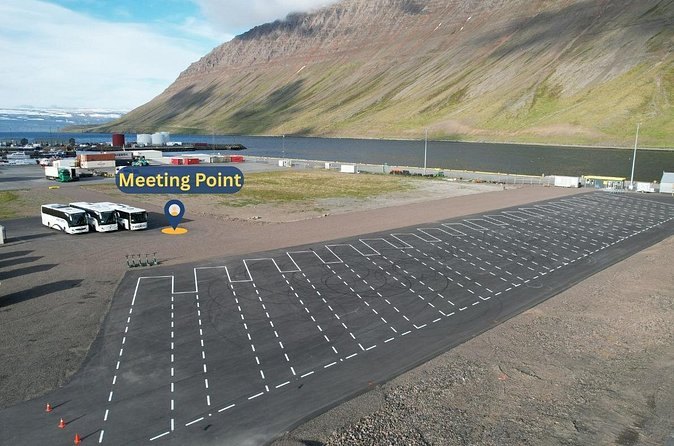
Six of the nine places worth reaching from Ísafjörður cost nothing and need no booking, including the waterfall. That makes this a real question rather than a rhetorical one, so here is the arithmetic, both ways.
What you can reach on your own, and what you cannot
| Place | Without a tour? | What it takes |
|---|---|---|
| Dynjandi waterfall | Yes | A car, Route 60, about an hour each way, no fee |
| The town and Neðstikaupstaður | Yes | Your feet, twenty minutes |
| Westfjords Heritage Museum | Yes | A ten-minute walk and ISK 1,600 |
| Bolungarvík and Ósvör | Yes | A car, fifteen minutes through the tunnel |
| Bolafjall platform | Yes, in season | A car, mid-June to mid-September |
| Hvítanes seals | Yes | A car, about thirty minutes along the Djúp |
| Vigur Island | No | There is one boat and it is a tour |
| Whales on the Djúp | No | Same |
| Hornstrandir | Not in a day | A scheduled boat and several days on foot |
Six of the nine are reachable under your own steam. That is unusual, and it is the honest starting point for this question.
Dynjandi has no gate, no ticket and no charge
This is the fact that makes the question worth asking. Dynjandi has been a protected natural monument since 1981, and protection here means a car park, a path and a small block of toilets. There is no ticket office, no shop and no café. Visit Westfjords, the regional tourist board, publishes no fee of any kind — not for entry and not for parking.
So when you buy a coach seat you are not buying access. You are buying an hour of Route 60 in each direction, a driver who does it daily, and a guarantee that you are back before your ship leaves.
What does the drive actually involve?
Route 60 south, roughly an hour, on a marked and paved road that crosses Dýrafjörður and passes through Dýrafjarðargöng, a 5.6 km tunnel opened in October 2020. That tunnel is the reason this question is even reasonable: before it, the route climbed Hrafnseyrarheiði, a mountain pass that closed for much of the winter and put about 27 km on the journey.
In summer it is straightforward. In winter, treat it as a maybe rather than a fixture: snow, ice and avalanche risk still close sections without much notice. Check road.is the morning you go.
The arithmetic, for a party of two
| Two coach seats | A hire car for a day | |
|---|---|---|
| Direct cost | From $81 × 2 = $162 | Roughly a day's rental plus fuel |
| What it reaches | Dynjandi and back | Dynjandi, Bolungarvík, the seals, Þingeyri |
| Time at the fall | 90 minutes, fixed | As long as you like |
| If the road shuts | Their problem | Yours |
| If you are on a ship | They plan around the all-aboard | You do |
For two people on a single day the coach usually wins on cost and always wins on risk. For two people over two days the car wins on everything, because the second day costs almost nothing extra and opens four more places.
When does the tour win outright?
- You are off a ship. A road closure or a puncture is your problem and the ship will not wait.
- It is winter. Route 60 is not a promise between October and April.
- You want the commentary. Travellers here write about the guides more than about the waterfall, which tells you something.
- You are one person. A hire car for one is expensive per head.
- You want Vigur or the whales. There is no self-guided version of a boat.
When does going alone win outright?
- You have two or more days. The marginal cost of the second day is fuel.
- You want to be at the fall before the coaches. They arrive in waves, timed to the ships.
- You want the villages. No scheduled trip here strings Bolungarvík, Súðavík and Flateyri together except a private one.
- You are travelling with someone who needs to set the pace. Ninety minutes at the fall is a fixed number on a coach.
What a car costs you that a coach does not
Attention. Icelandic single-lane bridges, blind summits, gravel edges and sheep on the road are all real, and the Westfjords have all four. You will also be driving the same hour twice while somebody else could be pointing things out. That is a genuine trade rather than a scare: plenty of visitors do it happily, and it is why the visiting page covers hiring in the first place.
Walking the town costs nothing at all
Ísafjörður is twenty minutes end to end. At the far end of the spit, Neðstikaupstaður holds Krambúð of 1757, Faktorshús of 1765, Tjöruhúsið of 1781 and Turnhúsið of 1784 — the oldest cluster of timber-frame houses in Iceland. The museum inside the last of them charges ISK 1,600 and runs 15 May to 31 August, 10:00 to 17:00, then to 15 September on shorter hours. Everything outside the door is free. The highlights page covers what you are looking at.
The middle option most people miss
A private trip is not the same as a guided coach. Four of the five here are priced per group of up to four, which at four travellers is roughly $469 a head for a day that covers Dynjandi, Bolafjall, Flateyri, Þingeyri and Bolungarvík. You get the flexibility of driving yourself without doing the driving, and somebody who knows whether the mountain road opened this morning.
The private tours page sets out what the five of them differ on, and what tours cost does the per-head sums properly.
What a hire car costs against what it opens
The honest accounting is not fuel against fares, because the two do not buy the same thing. A coach seat buys one place. A car buys the whole peninsula for as long as you keep it: Bolungarvík and Ósvör through the tunnel, the Hvítanes seals along the Djúp, Súðavík, Flateyri, Þingeyri, and Bolafjall in the twelve weeks its road is open.
So the question is not whether the car is cheaper for a day. It is whether you have a second day. With one, the coach usually wins. With two, the car wins outright, and by the third it is not close. The highlights page lists what the extra days reach.
Three things a guide tells you that a road sign does not
Whether the mountain road opened this morning. The Bolafjall road is typically passable only from mid-June to mid-September, and inside that window it still depends on the day.
Which of the lower falls is worth stopping at. Six smaller waterfalls line the path up at the waterfall and most visitors walk past them looking at the big one.
What happened in Súðavík. Travellers on the guided fjord tour describe meeting people who lived through the 1995 avalanche, which is not something a car delivers.
That is the real case for a guide here, and it is a better one than convenience. The decision guide sorts the guided options by what they add rather than by what they cost.
So which should you book?
If you are here for one day off a ship: book the coach. It is From $81, it removes every risk you cannot control, and it puts you at the fall for ninety minutes. If you are here for three days with a car: book the boat to Vigur and nothing else, and drive the rest. If you are four people with one long day: price the private trip, because the per-group basis makes it closer than it looks.
Sources
Checked on 5 September 2026. Hours, fares and road conditions belong to the bodies that publish them and they change with the season. The official pages are the place to confirm before you travel.
- Visit Westfjords — Dynjandi
- Visit Westfjords — Westfjords Heritage Museum
- Visit Westfjords — the Bolafjall road season
- Icelandic Road Administration — road conditions
- Visit Westfjords — the regional tourist board
If the arithmetic below goes the other way, a Dynjandi waterfall tour from Isafjordur removes the road risk for the price of a tank of fuel.
Every trip named in this guide is compared on price, hours and what the fare covers at Isafjordur Tours.
Frequently asked questions
Can I drive to Dynjandi myself?
How much does it cost to visit Dynjandi?
Do I need a car?
Can you reach Dynjandi in winter?
Are private tours worth it here?
Is there a walking tour of Isafjordur?
Whichever way the sum comes out
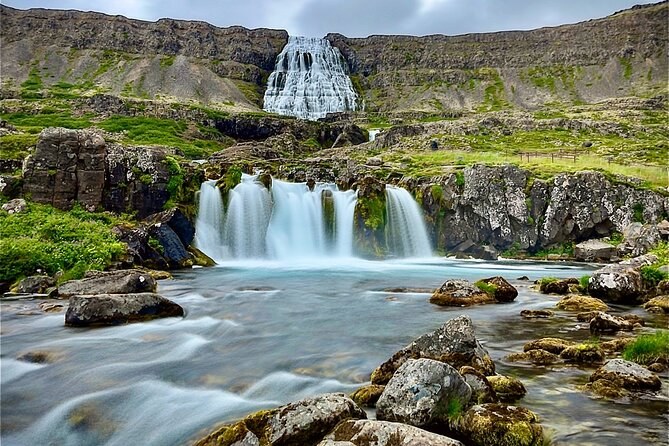
3.5-Hour Sightseeing Tour to Dynjandi Waterfall
If the arithmetic says take the coach: three and a half hours, out of the harbour, nothing else attached.
From $82 per person
Check Availability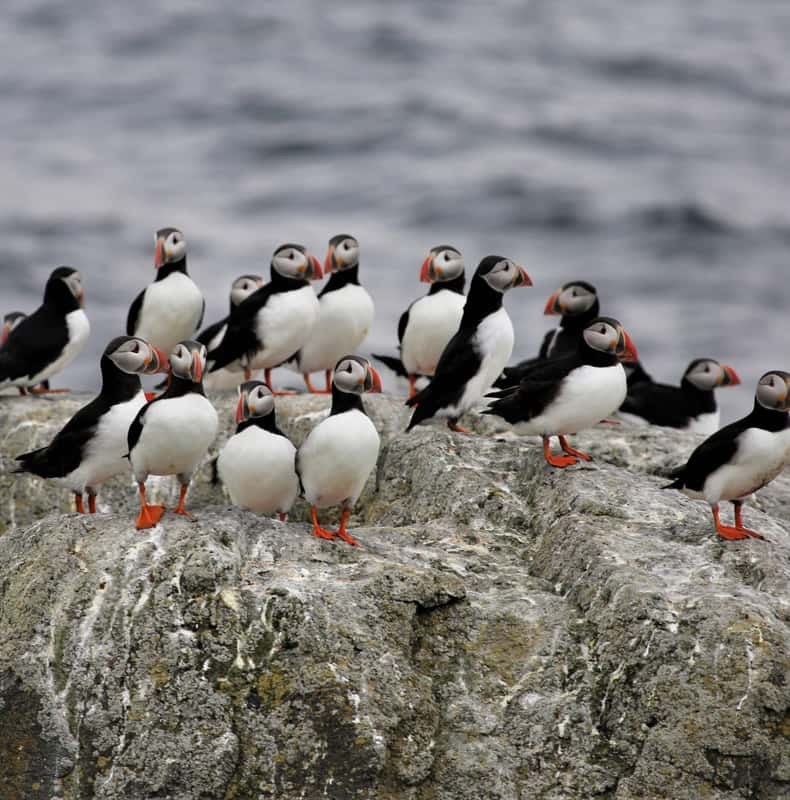
Vigur Island Tour from Isafjordur
The one thing no hire car reaches — a landing on an inhabited island half an hour out.
From $229 per person
Check Availability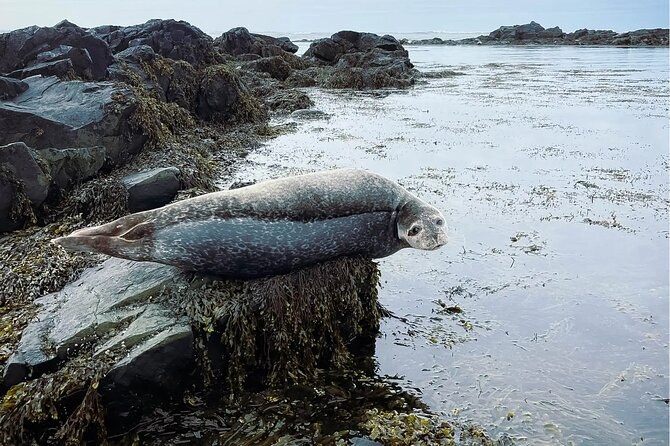
Isafjordur and Westfjords Private Day Tour
The middle option: your own vehicle and driver for up to twelve hours, priced per group of four.
From $1,785 per group, up to 4
Check AvailabilityThe honest summary: with a car and two days, book almost nothing. With a ship and six hours, book the coach. The middle case is a party of four, and that one is genuinely close.