The Best Time to Visit Isafjordur, Month by Month
Four things people come here for run on four different calendars, and only late June and July line all four up. This guide takes them one month at a time so you can pick the one that matters to you.
Four calendars, and only two months line all four up
| May | June | July | August | September | Oct–Apr | |
|---|---|---|---|---|---|---|
| Puffins on Vigur | Yes | Yes | Yes | Until early Aug | Few | No |
| Whale trips on the Djúp | Yes | Yes | Yes | Yes | Yes | Limited |
| The Bolafjall road | No | From mid-month | Yes | Yes | To mid-month | No |
| Westfjords Heritage Museum | From 15 May | Yes | Yes | Yes | To 15 Sep | No |
| Ósvör Maritime Museum | No | From 10 Jun | Yes | To 20 Aug | No | No |
| Direct sun on the town | All night | All night | All night | Yes | Yes | None 24 Nov – 25 Jan |
Late June and July are the only weeks when every row says yes. Whether you need every row is the actual question.
What the numbers do across the year
| Month | Daily mean | Rainfall | The thing that changes |
|---|---|---|---|
| January | −1.5 °C | 112.5 mm | The sun returns about the 25th |
| February | −1.0 °C | 93.0 mm | Driest of the winter, still shut |
| March | −1.6 °C | 92.6 mm | The coldest by the numbers |
| April | 1.1 °C | 72.8 mm | The puffins reach Vigur mid-month |
| May | 4.8 °C | 29.3 mm | Driest month of the year; the museum opens |
| June | 8.1 °C | 37.2 mm | Ósvör and the mountain road open |
| July | 9.9 °C | 35.1 mm | Warmest; terns nesting on Vigur |
| August | 9.2 °C | 48.2 mm | The puffins start leaving |
| September | 5.9 °C | 77.7 mm | The museum and the road close mid-month |
| October | 3.1 °C | 114.3 mm | Second wettest; the season ends |
| November | 0.3 °C | 119.9 mm | Wettest; the sun goes about the 24th |
| December | −1.2 °C | 99.2 mm | No direct sun at all |
Published 1961–1990 normals for Þórustaðir, the nearest station with a long series, 16.5 km from town. The shape of a normal year rather than a forecast.
When are the puffins actually here?
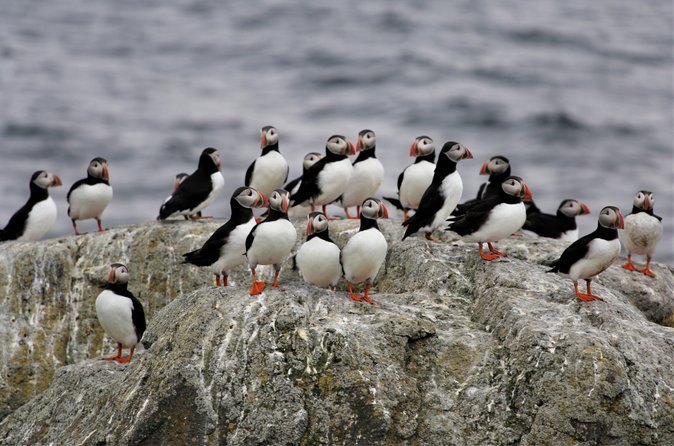
Mid-April to early August, and then it tails off fast: the island's own team say sightings are few from mid-August, with other seabird species building again to the end of September. Travellers who came in mid-August still saw them; travellers who came in early September did not, and wrote instead about the seals, the eiderdown and the history.
If puffins are the reason you booked, come in May, June or the first half of July, and put the island crossing early in your stay so weather leaves you a second attempt.
When are the whales here?
Humpbacks are what the three-hour sailings look for, and nobody guarantees them. Ísafjarðardjúp is a feeding ground rather than a corridor, so a sighting is a back, a breath and a dive rather than a performance. The Vigur team describe whale and seal watching in the Djúp as year-round; what thins it in winter is the weather and the number of boats running, not the animals.
What are the two dark months like?
From about 24 November the mountains around Skutulsfjörður are high enough that the sun does not clear them at all, and the town sees none until about 25 January. Its return is marked with sólarkaffi — coffee and pancakes — and the town does not entirely agree on the date: some keep to the 25th, some wait until the sun reaches Sólgata, and some wait until it reaches their own window.
This is a fact about light rather than temperature. It does more to change how a winter visit feels than the thermometer does, and it is the single most distinctive thing about living here.
Which month if you only want the waterfall?
Any month the road is clear, which realistically means May to September. Dynjandi has no season of its own — no gate, no opening hours, no closure — and it is arguably better in rain. May and September are the quiet ends with the coaches still running. In winter, Route 60 is the constraint rather than the fall, and the weather page covers what closes.
Which month if you want it empty?
May or the second half of September. Fewer ships are in, most trips are still sailing, and the light in September is the best of the year for photographs. May is also the driest month here by some distance, at 29.3 mm against November's 120.
The Bolafjall problem
The 638-metre platform that opened in 2022 is the one thing on this list with a hard road season: typically mid-June to mid-September, and weather-dependent even inside it. Only the two private day tours build it in, because no scheduled trip can promise a road that might be shut. If the view over Ísafjarðardjúp, Jökulfirðir and Hornstrandir is what you came for, you are looking at a three-month window and a private booking. The highlights page has the rest of it.
Is it worth coming in winter at all?
For the town, yes. For this list, no. The museums are shut, the mountain road is under snow, Route 60 is unreliable and almost nothing sold here runs. What you get instead is a working fishing town with about 2,700 people in it, the sólarkaffi if you time it, and a real chance that the road south is closed on the morning you wanted it open.
Which month for the Ósvör fishing station and the museum?
The two paid attractions here keep short and mismatched seasons. The Westfjords Heritage Museum, in the 1784 warehouse at Neðstikaupstaður, runs 15 May to 31 August from 10:00 to 17:00, then 1 to 15 September from 11:00 to 15:00, and charges ISK 1,600 for an adult. Ósvör, the rebuilt nineteenth-century fishing station at Bolungarvík, runs only 10 June to 20 August from 10:00 to 16:00, with other times by arrangement.
The overlap is about ten weeks. If both matter to you, that is your window, and it is worth confirming Ósvör's dates on the official listing before you build a day around it — a museum directory publishes a slightly different season, and the regional tourist board is the one this site follows.
What the shoulder months actually feel like
May is the driest month of the year here at 29.3 mm, which surprises people who expect Iceland to be wet in spring. The puffins are already on Vigur, the boats are sailing, and the ships have not started arriving in numbers. What you do not get is the mountain road or Ósvör.
September is the reverse: everything is still open until the middle of the month and then it closes fast, the light is the best of the year for photographs, and the rain comes back to 77.7 mm. The puffins have gone and the other seabirds have not. If you can only travel outside high summer, take the first half of September over the second half of May.
How to pick your month in one line
- Puffins: May, June, early July.
- Everything open at once: late June to mid-September.
- Fewest people: May, or the second half of September.
- Driest: May, at 29.3 mm.
- Warmest: July, at 9.9 °C, which tells you what to pack.
- The sólarkaffi: around 25 January, and nothing else.
Sources
Checked on 5 September 2026. Hours, fares and road conditions belong to the bodies that publish them and they change with the season. The official pages are the place to confirm before you travel.
- Visit Westfjords — Vigur
- Visit Westfjords — Outstanding Bolafjall
- Visit Westfjords — Westfjords Heritage Museum
- Visit Westfjords — Ósvör Maritime Museum
- University Centre of the Westfjords — the sun and sólarkaffi
- Wikipedia — Ísafjörður climate table
- Icelandic Met Office — forecasts and warnings
Every trip named in this guide is compared on price, hours and what the fare covers at Isafjordur Tours.
Frequently asked questions
When is the best time to visit Isafjordur?
When can I see puffins near Isafjordur?
Are whale sightings guaranteed?
Is it true the sun disappears in winter?
What is the weather like?
Can you reach Dynjandi in winter?
Trips whose season this guide is about
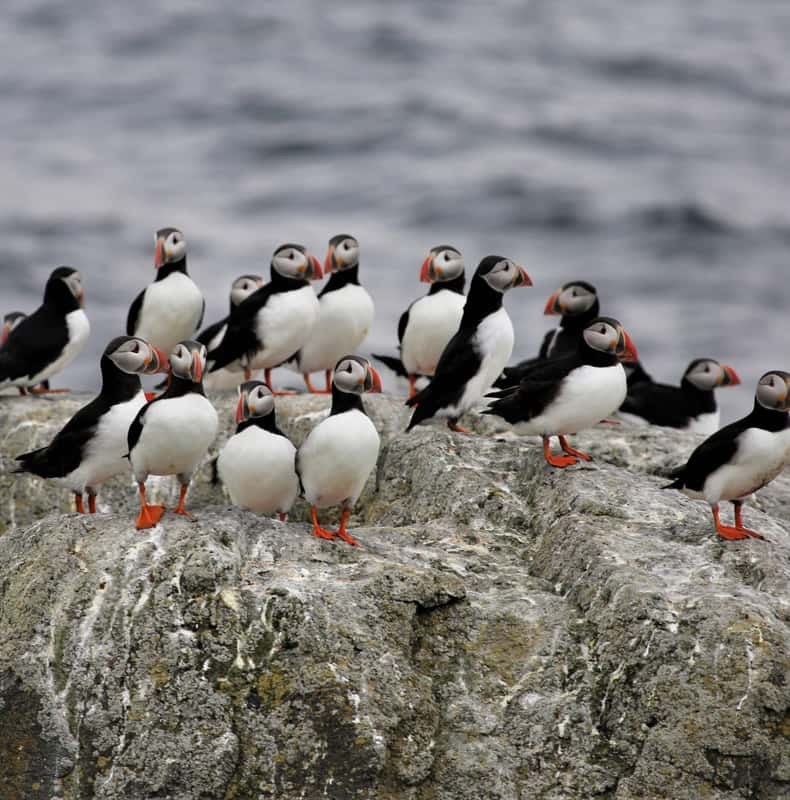
Vigur Island Tour from Isafjordur
The trip with the tightest calendar: puffins from mid-April to early August, and the island year-round.
From $229 per person
Check Availability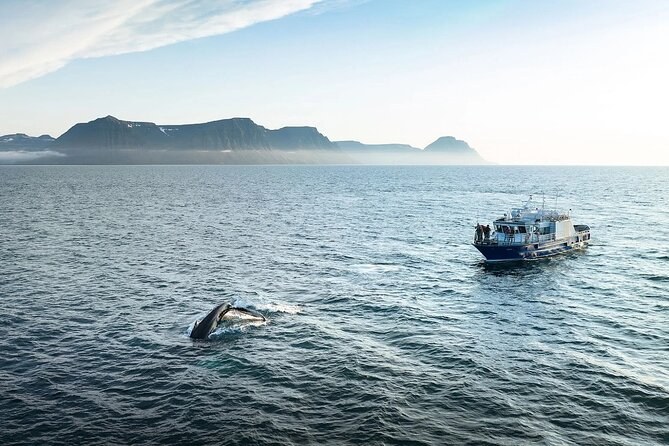
Whale Watching in the Westfjords from Isafjordur
The least seasonal thing here, and the one the wind decides.
From $111 per person
Check Availability
4-Hour Isafjordur and Dynjandi Tour with Photo Stops
Four hours built round photo stops, which is what September light is for.
From $179 per person
Check AvailabilityIf you need everything open at once, come between late June and mid-September. If you need one thing, the calendar for that one thing is above and it is usually wider than you feared.