Isafjordur Weather, and What It Does to Your Day
In most places the weather decides whether you are comfortable. Here it decides whether you go at all, so read this before you pick your date. On a day the fjord is closed in, the Isafjordur private tours are the ones that can change their own route.
What the weather does to a visit here
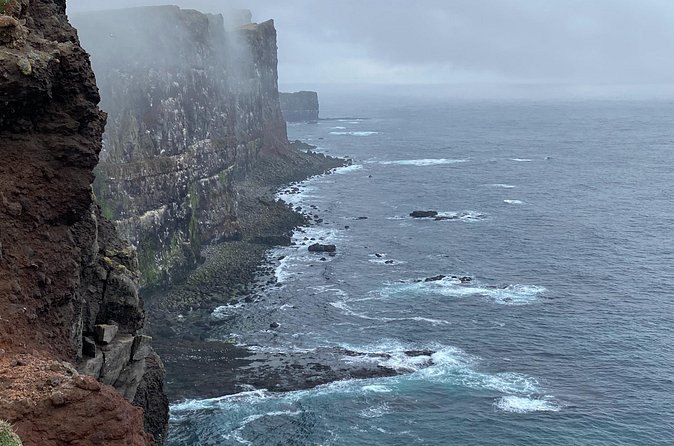
Three things, in order of how often they bite. Wind closes the harbour. The boats out into Ísafjarðardjúp stop for wind rather than rain, and that is the commonest cancellation here. Snow and ice close Route 60, the road south to the waterfall, for stretches of the winter; the 2020 tunnel removed the worst pass and not the weather. And the mountains take the sun away from about 24 November to about 25 January, which is a fact about light rather than temperature and changes a winter visit completely.
What the weather rarely does is stop a coach. If your date is fixed and the forecast is poor, book a road trip to Dynjandi: it is the one most likely to run whatever the morning brings. And you can cancel any fare here but one in full at 24 hours, which is the other half of the answer. Check the forecast the night before, then decide.
Isafjordur month by month
Temperature and precipitation below are the published 1961–1990 normals for Þórustaðir, the nearest station with a long series, 16.5 km from town. Treat them as the shape of a normal year rather than a forecast.
January
Daily mean −1.5 °C, from −5.0 to 1.2, and 112.5 mm of precipitation. The sun is still behind the mountains at the start of the month and returns to the town around the 25th, which the town marks with sólarkaffi. Route 60 to the waterfall can close for days. Come for the town, not the list.
February
Daily mean −1.0 °C and 93.0 mm of precipitation, the driest of the winter months. The sun is back but low and short. Both museums are closed and the Bolafjall road is under snow. Almost nothing here runs as an organised trip.
March
The coldest month by the numbers: daily mean −1.6 °C, from −5.0 to 1.1, with 92.6 mm of precipitation. Days lengthen quickly. Road conditions still decide whether Dynjandi is reachable on any given morning. Check road.is before you commit to the drive.
April
Daily mean 1.1 °C and 72.8 mm of precipitation as the wet season eases. The puffins reach Vigur in the middle of the month. The Bolafjall road is still shut and both museums are still closed. The waterfall becomes a reliable drive again in settled spells.
May
Daily mean 4.8 °C and 29.3 mm of precipitation — the driest month of the year here. The Westfjords Heritage Museum opens on the 15th. Puffins are on Vigur and the boats are sailing. This is the quiet end of the season with most of the trips already running.
June
Daily mean 8.1 °C, from 5.1 to 10.7, and 37.2 mm of precipitation. The Ósvör fishing station opens on the 10th and the Bolafjall road usually opens mid-month. Light lasts effectively all night. Every trip listed is running by the end of it.
July
The warmest month: daily mean 9.9 °C, from 6.8 to 12.5, with 35.1 mm of precipitation. Arctic terns are nesting on Vigur, which is the one month the island hands out sticks to carry above your head. Everything is open. Book the small departures several days ahead.
August
Daily mean 9.2 °C and 48.2 mm of precipitation as the rain begins to return. The puffins start leaving in the first week and sightings are few after the middle. Ósvör closes on the 20th. The whale trips carry on unchanged through all of it.
September
Daily mean 5.9 °C and 77.7 mm of precipitation. The heritage museum closes on the 15th and the Bolafjall road usually shuts around the same time. Seabirds other than puffins build to the end of the month. The light is the best of the year for photographs.
October
Daily mean 3.1 °C and 114.3 mm of precipitation, the second wettest month. Both museums are closed and the mountain road is shut. Organised departures thin out sharply. A hire car and a flexible plan work better than a booking this month.
November
The wettest month at 119.9 mm, with a daily mean of 0.3 °C. Around the 24th the sun stops clearing the mountains and the town goes without it. Winter road closures begin in earnest. Nothing seasonal is open.
December
Daily mean −1.2 °C and 99.2 mm of precipitation. There is no direct sun on the town at all this month. Days are short and the roads south are unreliable. The town keeps working; the tour calendar does not.
The seasons, and which one you want
| Season | What it is | What is open | Who it suits |
|---|---|---|---|
| May | Driest month of the year, 29.3 mm | Puffins, boats, the heritage museum from the 15th | Anyone who wants the season without the ships |
| June – July | Warmest and lightest, means of 8.1 and 9.9 °C | Everything | First-time visitors who want one trip and no compromises |
| August | Warm, wetter at 48.2 mm | Everything until the puffins go | Whale watchers, who lose nothing |
| September | Cooling, 77.7 mm | Boats, museum to the 15th, road to mid-month | Photographers and anyone avoiding crowds |
| October – April | Wet, dark, road-dependent | The town | Repeat visitors and anyone chasing sólarkaffi |
Best time of day
Go in the morning, for two reasons that have nothing to do with light. The ships land their passengers together, so the waterfall car park fills and empties in waves; if you can pick your departure, pick the early one. And wind on the Djúp builds through the day, so your morning sailing is the one least likely to be called off. In midsummer you will not find a bad hour for photographs, because there is barely a dark one.
What to wear, whatever the month
Pack layers, a windproof shell, gloves and a hat, in July as much as in May. The July mean of 9.9 °C is the warmest number this town produces, and an open deck takes several degrees off it. Your shoes matter more than your waterproofs: the path beside the falls is loose rock, and the operators and the reviewers agree about it. The visiting page has the rest of what you need to bring.
Weather questions people ask
What is the weather like?
Is it true the sun disappears in winter?
What happens if the weather stops the tour?
What should I wear?
Can you reach Dynjandi in winter?
When the forecast has settled and you know which day is yours, Isafjordur Tours sets out what is running and what each fare covers.
Sources
Checked on 5 September 2026. Hours, fares and road conditions belong to the bodies that publish them and they change with the season. The official pages are the place to confirm before you travel.
Book something that runs in the weather you have
Free cancellation up to 24 hours ahead on every trip here but one.
See Top Tours