Visiting Isafjordur
Ísafjörður is a town of about 2,700 people on a sand spit in Skutulsfjörður, and it is the administrative centre of the least populous region in Iceland. Nothing here charges admission — not the town, not the old trading post, not even Dynjandi, the waterfall most visitors have actually come for. What you pay for is the distance, and this page sets out what that costs whichever way you arrive. Once you know what a day here costs before a single fare, the Isafjordur day tours are easier to weigh against a hire car and a tank of fuel.
Four ways in, and what each one costs you
| Arriving | How long | Runs | Worth knowing |
|---|---|---|---|
| Fly from Reykjavík City Airport (RKV) to Ísafjörður (IFJ) | About 40 minutes | Year-round, Icelandair | RKV is the small domestic airport in the capital, not Keflavík |
| Drive from Reykjavík | About 6 hours for roughly 454 km | Summer, reliably | Winter can add hours or close sections; check road.is the morning you travel |
| Ferry Baldur, Stykkishólmur to Brjánslækur | Plus a long drive north | Year-round | Shortens the road rather than replacing it; calls at Flatey |
| Cruise ship | A call of roughly 6 to 10 hours | Roughly May to September | Coaches wait outside the terminal; the boats are further round the harbour |
The flight is the only arrival that stays quick through the winter. Book it early; the aircraft are small. If you are driving, treat the Westfjords as a detour rather than a stop. Route 1 does not come here, and the last stretch is a long way round the fjords.
Where the tours actually leave from
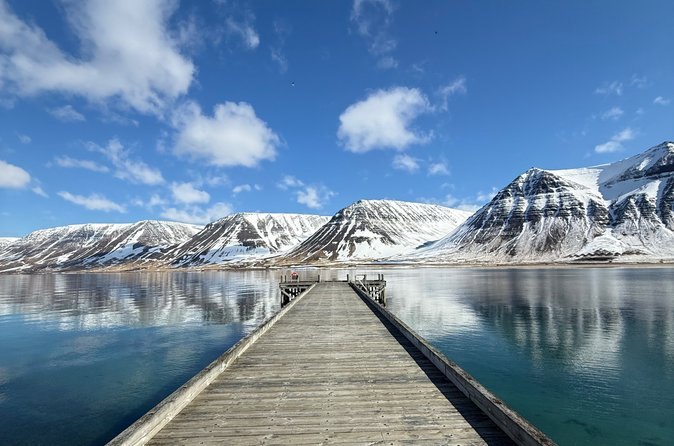
Four departure points sit inside about a kilometre of each other, and they are not interchangeable. The cruise dock is where the coaches wait, directly outside a terminal with a single exit, and where the e-bike guides stand beside their bikes. The old harbour, a few minutes further round, is where the boats are: the Vigur pier next to the tender berth, and the red boathouse on Ásgeirsgata that the whale trips sail from.
That last one is the thing travellers most often get wrong. The directions say to look for the red boathouse and that you cannot miss it. In practice there are several red buildings along there and yours sits back behind the others. So allow twenty minutes from the pier rather than five, and check in the fifteen to thirty minutes early you are asked for. Our map page walks each of the four in turn.
Not sure which pier is yours?
Every card here says where its trip meets, and the ones that collect you at the ship say that too.
Do you need a car?
Not for anything listed here. Every trip starts within a kilometre of the cruise dock, and you can walk the town end to end in about twenty minutes. A car earns its keep if you are staying several nights. It gets you to Bolungarvík, Súðavík and the smaller villages at your own pace, and it lets you drive to Dynjandi rather than sit on a coach. In winter it becomes a liability instead.
How long you actually need
A six-hour ship call
One thing. A coach to the waterfall and back is three and a half hours with an hour's margin either side, or a boat trip is three. Trying to fit both is how people miss the all-aboard.
A ten-hour call
Two, if one of them is short. The two-hour e-bike ride in the morning and a waterfall coach in the afternoon works; so does a boat and a walk round the old trading post.
Two or three nights
Enough for the waterfall, the island, a whale trip and the Bolafjall road, with a spare day for the weather to take one of them away and give it back.
What is open, and when
| Place | Season | Hours | Admission |
|---|---|---|---|
| Westfjords Heritage Museum, Neðstakaupstað | 15 May – 31 August | 10:00–17:00 | ISK 1,600 adult · ISK 1,200 senior |
| Westfjords Heritage Museum | 1 – 15 September | 11:00–15:00 | As above |
| Ósvör Maritime Museum, Bolungarvík | 10 June – 20 August | 10:00–16:00 | Charged; no figure is published |
| Dynjandi | No season | No gate | Free |
| The Bolafjall road | Typically mid-June to mid-September | Daylight, weather permitting | Free |
Two of those need a note. The Ósvör season above is the one the regional tourist board publishes; a museum directory gives slightly different dates, so confirm on the official listing before you build a day round it. And Dynjandi has no ticket office at all, which also means no shop and no café — several travellers have been surprised by the queue for the toilets and by there being nothing to buy, so carry what you want for the stop.
What to wear, and what that actually means here
July averages 9.9 °C and November brings about 120 mm of rain, and the classification is tundra rather than temperate. But the number that changes plans here is wind, not temperature: it is what closes the harbour, and it is why an open deck on Ísafjarðardjúp feels nothing like nine degrees. Layers, a windproof outer shell, gloves and a hat, even in July.
Footwear matters more than most places. The path from the Dynjandi car park up to the foot of the main fall takes about fifteen minutes over loose rock, and both everyone who has walked it agrees: wear shoes with grip. The boats are boarded by steps with a handrail, so nothing here is step-free.
If you are off a ship
Book something that gets you back with margin, not something that fills the call exactly. The coach trips run three and a half hours against calls of six or more. That is the right shape. Every trip here but one refunds in full at 24 hours, so a ship that skips the port for weather costs you nothing, and travellers have described operators refunding when a tender could not run. The cruise port page has the detail. When you are ready to compare fares, Isafjordur Tours sets them out side by side.
Sources
Checked on 5 September 2026. Hours, fares and road conditions belong to the bodies that publish them and they change with the season. The official pages are the place to confirm before you travel.
Ready to pick a tour?
Every trip here but one refunds in full up to 24 hours before it starts, so you can book the date and settle the rest later.
See Top Tours